THE CAMBRIDGE WOODWORK SCHOOL
OUR STORY
Cambridge Woodwork School was founded by long-time business owner and woodworker
Ray Spooner to keep practical woodworking skills alive and make them accessible to everyone.
From complete beginners and young makers to aspiring site carpenters, furniture makers, corporate teams and groups, our courses offer the opportunity to learn practical skills, work with real timber and experience the satisfaction of making something with your own hands.
Whether you're here to
learn a trade, develop a new skill, make something beautiful or simply spend a day doing something completely different, you'll receive practical, hands-on tuition in a relaxed and welcoming workshop.
THE PEOPLE
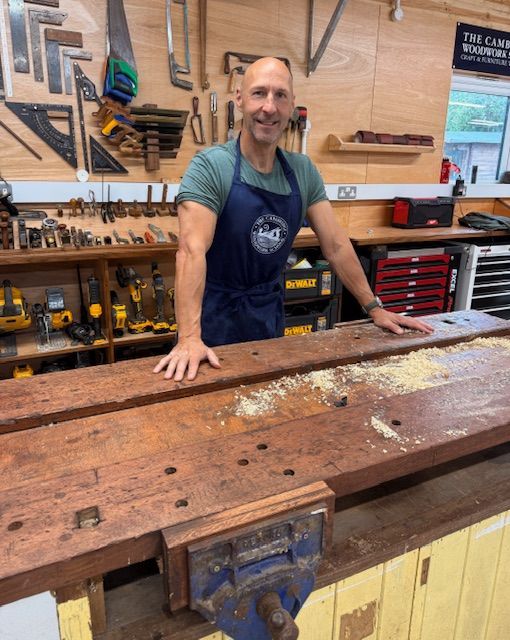
Ray Spooner
About the Teaching
Courses are led by Ray Spooner, a lifelong furniture designer, maker and construction professional with more than 40 years' practical experience.
This isn't a trade college or a DIY demonstration. You'll be at the bench, using the tools, working with timber and learning by doing.
Teaching is personal, practical and hands-on, in a calm and friendly workshop environment where there's time to ask questions, build confidence and enjoy the experience.
Come to learn a skill, make something beautiful or simply spend a day doing something completely different.
OUR LOCATION
We are based in Foxton South Cambridge. Once you have booked on a course at The Cambridge Woodwork School, we will email you the directions to the school along with the local accommodation list. If you need any help with accommodation or transport, please do contact us.
Use Google Maps and search for our postcode. We are the only property in that postcode.
Parking
We have onsite parking for our students on our driveway. Once you have booked your place on a course or workshop you will receive the entry code to the car park.
Public transport
The nearest train station is Foxton. You will need to arrange a taxi or if you are feeling like a stroll we are about a twenty minute walk from the station. We highly recommend that if you can drive, please do!
Accommodation
If you are attending a course and require accommodation in the local area, there are a number of bed and breakfast establishments and hotels within a few miles of the school.
With Cambridge on our doorstep, you may choose to stay in Cambridge itself and explore this vibrant university city. The Cambridge Tourist Information is a good place to start with ideas for your visit. visitcambridge.org

FAQs
Do I need any experience?
No, just a passion to learn. We deliver professional courses and workshops for complete beginners. If you choose one of our two- or five-day experiences then unless you have previous experience it is best to attend one of our one-day introductory courses first. If you are unsure then please do contact us.
I don't know which course I need to do!
Just give us a call and we can talk through the options.
What is included, do I need to bring anything?
Absolutely everything you need to complete the course or workshop,
including the tools and materials. On full day courses you will
need to bring a packed lunch. One last thing, please do not wear very loose clothing and please wear hard shoes or boots. All other PPE will be provided. The exception to this is is very hot weather when shorts will be allowed.
Where can I stay as I need accommodation?
We have a list of local accommodation that we can send to you.
Is there parking?
Parking is on the driveway at the workshop.
Are children allowed?
Our minimum age is 16 years oldand 11 on Young Makers.
Do I need to bring lunch?
On full day courses you will need to bring a packed lunch. We have a fridge and biscuits. Beverages throughout the day are provided.
What time does the course start and finish?
Course times vary - so please check the times for each individual course. We rarely finish early.
Can I pay a deposit for my course?
not applicable
Is there an instalment plan available?
Not applicable
Other Questions
If the answer you are looking for is not here, please call us on 07803 024401 or email info@cambridgewoodworkschool.co.uk
Still have a question?
Our Philosophy
For most of human history, timber has been one of the central materials of civilisation. Long before modern materials existed, people relied on wood to build shelters, craft tools, make furniture, construct boats, and create the objects that supported everyday life.
From early survival and settlement through to the development of skilled trades, woodworking has been part of the human story for thousands of years. Joinery, carpentry, furniture making and boat building all grew from this deep dependence on wood and the knowledge passed from one generation to the next.
Although modern construction now includes steel, concrete, plastics and aluminium, timber remains an essential material. More importantly, the craft of working with wood continues to offer something that modern life often lacks.
In an increasingly digital world, woodworking reconnects us with something slower, more physical and more meaningful. To work with timber is to engage all the senses: to feel the grain beneath your hands, smell the character of the wood, and shape a natural material into something useful and lasting.
At Cambridge Woodwork School, we believe this experience matters. Our courses are designed to give people the opportunity to step into that long tradition of craftsmanship. When students work with timber, they are participating in a craft that generations before them relied upon for shelter, tools, livelihood and creativity.
By the end of a course, you leave not only with a finished project you can be proud of, but with a deeper understanding of the material, practical skills you can build on, and a renewed appreciation for the craft of making something real with your own hands.